
Understanding Your Guttering System
Half-round: a traditional curved profile widely used on homes. Square-line: a more angular profile often chosen for modern rooflines. Deep-flow: designed to carry greater flow than comparable standard profiles, depending on the system. Ogee: a decorative moulded profile often used for a traditional appearance.
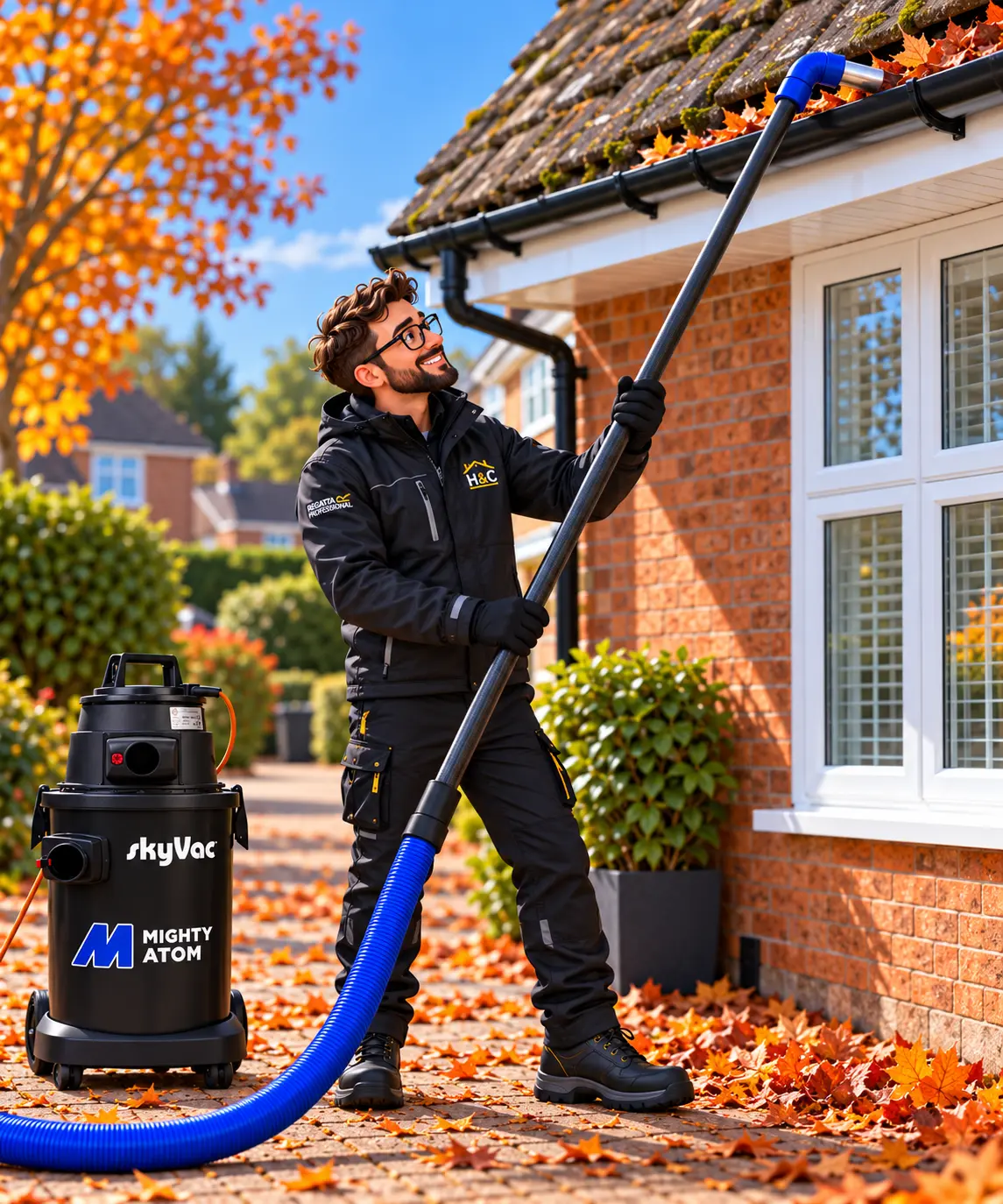
H&C educational imagery and design inspiration; not a claim of a completed installation at a particular location.
Common gutter profiles
Half-round: a traditional curved profile widely used on homes. Square-line: a more angular profile often chosen for modern rooflines. Deep-flow: designed to carry greater flow than comparable standard profiles, depending on the system. Ogee: a decorative moulded profile often used for a traditional appearance.
Main components
Gutter lengths collect water; union joints connect lengths and commonly incorporate seals; fascia brackets support the run; running outlets connect to downpipes; stop ends close the ends; angles turn corners; downpipes carry water away; and pipe clips secure downpipes to walls.
How to identify your gutter manufacturer and profile
If you need a replacement joint, bracket or fitting, first look for a moulded manufacturer name or logo. It is normally found on the inside of a gutter joint (union fitting) or along the inside of the gutter itself. You may also find markings on outlets or stop ends. Inspect only where safely accessible: do not climb or lean out to read markings. Once you have the brand, check the profile and size before buying replacement components.
Why compatibility matters
Similar-looking half-round or square-line systems are not necessarily interchangeable. Small differences in dimensions, joint design and seals can prevent a watertight fit. Check the manufacturer’s product specifications rather than forcing a fitting into place.
How much rainwater does a roof produce?
One millimetre of rain on one square metre of horizontal catchment area produces approximately one litre of runoff. A 60 m² effective roof catchment receiving 20 mm of rain produces about 1,200 litres before losses. Gutter design also depends on how quickly the rain falls, not just the total volume.
Matt’s professional tip: Larger guttering is not automatically the solution to overflowing. Consider roof catchment, outlet position, downpipe capacity and installation condition together.
Practical experience behind the advice
H&C was established in 2018 by Matthias Holford, whose professional decorating experience dates from 2000 with City & Guilds and NVQ Painting and Decorating qualifications. H&C also brings more than 10 years’ exterior cleaning experience and shares practical guidance through Matt the Handy Helper.
Related advice
Product instructions and specialist advice
These guides support planning, not a diagnosis or a specification for every property. Follow the current product instructions and seek competent help where access, materials or services need assessment.